Female Voices in the Third Space: Researching Equality, Diversity and Inclusion in South-North Collaborative Online International Learning is a British Academy/Leverhulme funded project (SRG23\231301, 2023-2025) that aimed to research the evolving field of Collaborative Online International Learning (COIL)/Virtual Exchange (VE) in Higher Education (HE) through a Global South-North lens, focusing on female voices. Leask (2020) defines COIL as “online learning in an international setting, with interactive involvement of students and faculty from different international and intercultural backgrounds in and outside the classroom” (p. 188). We use COIL and VE in conjunction and as equivalent terms in this project. Drawing from the definition of VE from the Evidence-Validated Online Learning through Virtual Exchange (EVOLVE) project, we add to Leask’s definition of COIL that VE is a pedagogical approach, underpinned by research, “that consists of sustained, technology-enabled, people-to-people education programmes or activities in which constructive communication and interaction takes place between individuals or groups who are geographically separated and/or from different cultural backgrounds, with the support of educators or facilitators. Virtual Exchange combines the deep impact of intercultural dialogue and exchange with the broad reach of digital technology” (EVOLVE)
In this research project we evaluated a model of South-North COIL we had previously co-designed (see Figure below) against data generated through surveys, interviews and focus groups with female stakeholders (both staff and students) based in HE institutions in four different continents.
Our research aimed to further the understanding of digital inclusion and equality in HE. It investigated COIL as a Third Space that promotes substantive equality and supports the integration of pluralistic perspectives and of the UNESCO Global Citizenship Education attributes in HE curricula. In particular it sought to decenter the conceptualisation of ‘Internationalisation of the Curriculum (IoC)’ and open up ‘otherwise’ ways of knowing, being and relating through a decolonial lens that builds on knowledge produced by women (Orsini-Jones, et al., 2025).
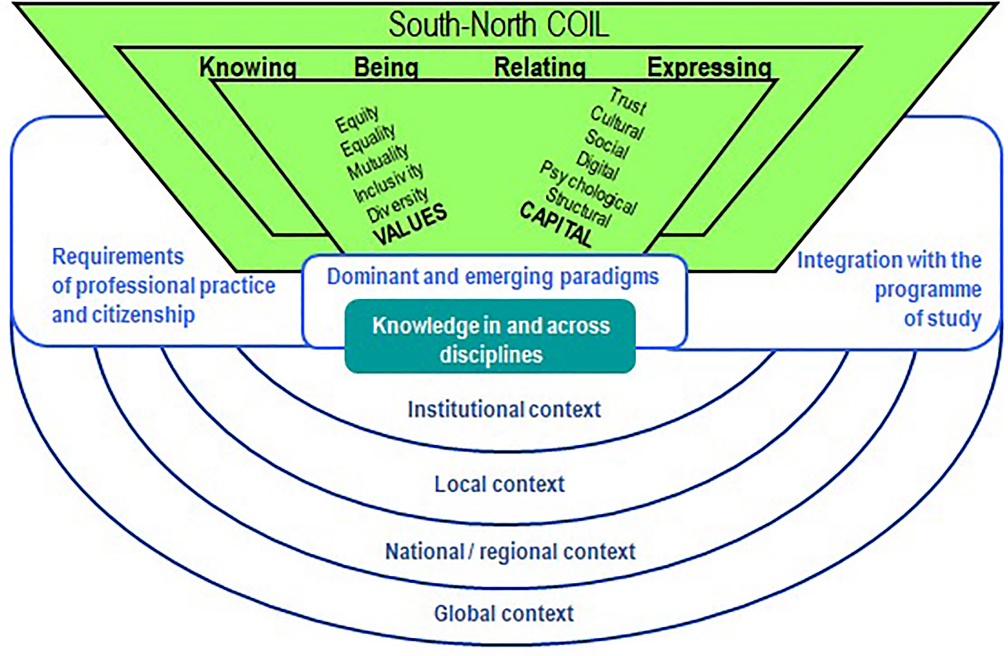
Figure 1 South-North COIL Conceptualisation, in Wimpenny, K., Finardi, K. R., Orsini-Jones, M., & Jacobs, L. (2022). Knowing, Being, Relating and Expressing Through Third Space Global South-North COIL: Digital Inclusion and Equity in International Higher Education. Journal of Studies in International Education, 26(2), 279-296. https://doi.org/10.1177/10283153221094085 inspired by the internationalisation of the curriculum model proposed by Leask & Bridge, C. (2013) Comparing Internationalisation of the curriculum in action across disciplines: theoretical and practical perspectives’.Compare: A Journal of Comparative and International Education, 43(1), 79-101 https://doi.org/10.1080/03057925.2013.746566
Aiming to provide a bottom-up perspective on COIL, the main research questions of this project were:
- How does the COIL framework designed by Wimpenny et al (2022, Figure 1) resonate with female staff and students who took part in South-North COIL projects?
- In what ways does the research evidence gathered from this project corroborate the ‘capitals of resonance’ previously identified in COIL: social capital, digital capital, cultural and psychological capital, trust capital and structural capital?
- To what extent does the research evidence gathered from this project validate the claim that COIL supports ‘Substantive Equality’ (accommodation of difference and promotion of the worth of all – cf. Hagenmeier, 2021) for the female participants involved in it?
The study is underpinned by decolonial theory (Guimarães et al., 2019; Stein & Andreotti, 2021). Surveys, interviews and focus groups were carried out with female staff and students based in four different continents.
The concept analysis of the female students’ interview and focus group transcripts, carried out with the support of the qualitative analysis software NVivo (versions 14 and 15), focusing on the concepts as presented in the COIL framework in Figure 1, led to the creation of a edited conceptual framework (see Figure 2). Two new capitals were added (Linguistic and Agency/Autonomy) and new concepts/themes emerged which we have called ‘possibilities’:Empowering,Innovative, Transformational and Challenging.
Our findings would appear to substantiate that COIL/VE is an empowering, inclusive and transformational Third Space for women in HE that promotes equality, even if it presents numerous challenges.
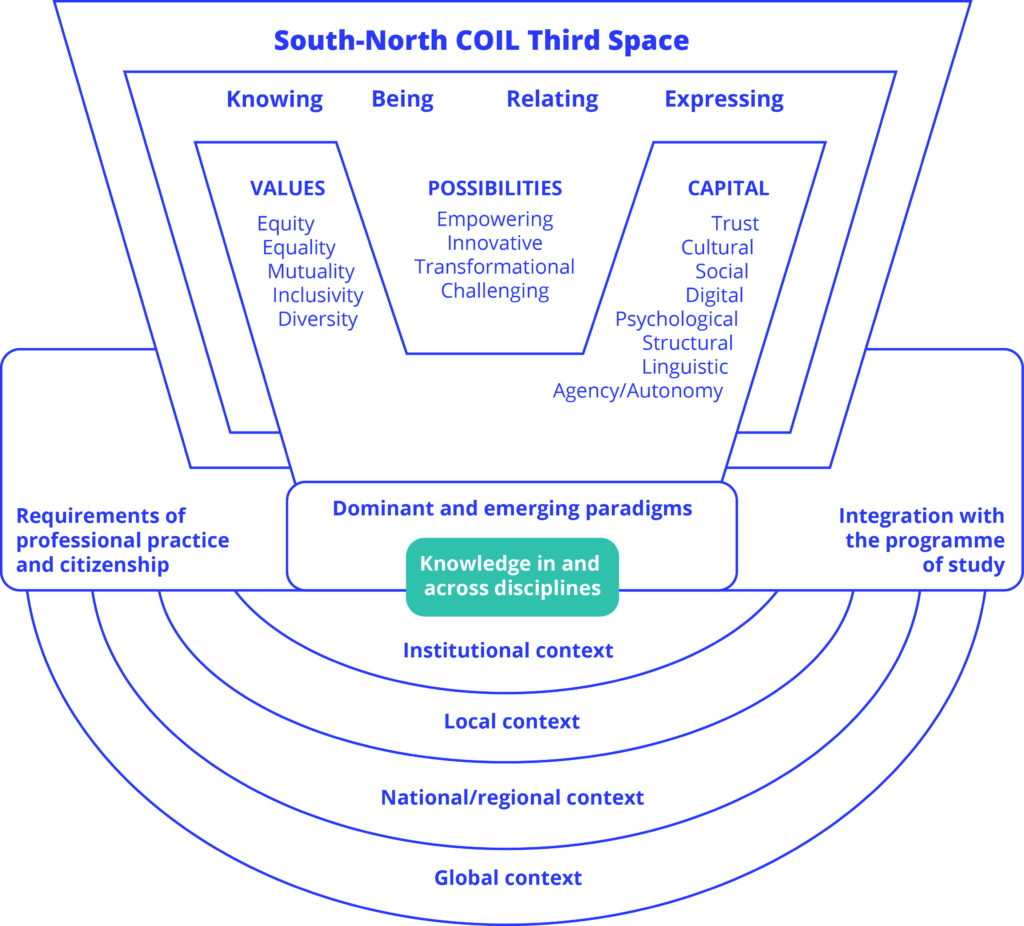
Figure 2 – Revised top section of Figure 1 – Female Students’ Voices (also see Orsini-Jones, et al. 2025, p. 248) – including the emerging themes in the centre and the addition of the two capitals ‘Linguistic’ and ‘Agency/Autonomy’.
The themes and subthemes that crystallised from the female academic staff data informed the creation of the COIL/VE Toolkit aimed at supporting staff interested in implementing COIL/VE in their institutions. The Toolkit can be downloaded from the COIL/VE Toolkit Tab on this website.
We are still (December 2025) in the process of refining our conceptual framework in view of the female academic staff insights. Watch this space….
References
Bhabha, H. K., & Rutherford, J. (2006). Third space. Multitudes, 26(3), 95–107. doi:10.3917/mult.026.0095
Guimarães, F. F., Mendes, A. R. M., Rodrigues, L. M., dos Santos Paiva, R. S., & Finardi, K. R. (2019). Internationalization at Home, COIL and Intercomprehension. SFU Educational Review, 12(3), 90-109.
Evidence-Validated Online Learning through Virtual Exchange (EVOLVE). (2025). What is Virtual Exchange? https://evolve-erasmus.eu/about-evolve/what-is-virtual-exchange/
Hagenmeier, C.C.A. (2021). Equality in Higher Education Partnerships: Defining the Concept in Divergent Contexts. PhD Thesis: University of Cape Town, South Africa https://open.uct.ac.za/handle/11427/35623
Leask, B, & Bridge, C. (2013) Comparing Internationalisation of the curriculum in action across disciplines: theoretical and practical perspectives’.Compare: A Journal of Comparative and International Education, 43(1), 79-101 https://doi.org/10.1080/03057925.2013.746566
Leask, B. (2020). Internationalization of the Curriculum, Teaching and Learning. In: Teixeira, P.N., Shin, J.C. (eds) The International Encyclopedia of Higher Education Systems and Institutions. Springer, Dordrecht. https://doi.org/10.1007/978-94-017-8905-9_244
Orsini-Jones, M., Jacobs, L., Finardi, K., & Wimpenny, K. (2025). Collaborative online international learning as a postdigital connected, embodied, relational & (socio)material Third Space: female voices. Higher Education Research & Development, 44(1), 237–252. https://doi.org/10.1080/07294360.2024.2429438
O’Dowd, R. (2022) Internationalising Higher Education and the Role of Virtual Exchange. Routledge
Stein, S., & Andreotti, V. (2021). Global citizenship otherwise. In Conversations on Global Citizenship Education (pp. 13-36). Routledge.
Wimpenny, K., Finardi, K. R., Orsini-Jones, M., & Jacobs, L. (2022). Knowing, Being, Relating and Expressing Through Third Space Global South-North COIL: Digital Inclusion and Equity in International Higher Education. Journal of Studies in International Education, 26(2), 279–296.